
LASIK Eye Surgery in La Jolla
Advanced Vision Correction by Pioneering Surgeons
Imagine waking up and seeing the world clearly without reaching for glasses or contacts. For thousands of patients in La Jolla and San Diego, LASIK eye surgery has transformed not just their vision, but their entire lifestyle. At Gordon Schanzlin New Vision Institute, we’ve been pioneering laser vision correction for over three decades, helping patients achieve the freedom of clear vision through cutting-edge technology and unparalleled surgical expertise.
Whether you’re a surfer catching waves in Pacific Beach, a professional navigating San Diego’s bustling downtown, or simply someone tired of the daily hassle of corrective eyewear, LASIK can be life-changing. Our board-certified ophthalmologists have literally shaped the field of refractive surgery, and we’re committed to providing you with the most advanced technology and personalized care available anywhere.

- What is LASIK? Understanding Laser Vision Correction
- Why Choose Gordon Schanzlin New Vision Institute for LASIK in La Jolla?
- LASIK Procedure: What to Expect
- LASIK Results and Benefits
- LASIK Technology: Advanced Systems for Superior Results
- Blended Vision: Monovision LASIK for Presbyopia
- Are You a Candidate for LASIK?
- LASIK Risks and Safety
- LASIK Alternatives: Other Vision Correction Options
- LASIK Frequently Asked Questions

What is LASIK?
Understanding Laser Vision Correction
LASIK, or Laser Assisted In-Situ Keratomileusis, is a proven surgical procedure that reshapes the cornea to correct refractive errors, the most common vision problems affecting millions of people worldwide. By precisely reshaping the cornea, LASIK improves how light refracts, or bends, to focus properly on the retina at the back of the eye.
This procedure can correct three primary refractive errors:
- Myopia (Nearsightedness): Difficulty seeing objects at a distance. Light focuses in front of the retina, making distant vision blurry while near vision remains clear.
- Hyperopia (Farsightedness): Difficulty seeing objects up close. Light focuses behind the retina, making near vision blurry while distance vision may be affected.
- Astigmatism: Blurred vision at all distances caused by an irregularly shaped cornea. This common condition often occurs alongside myopia or hyperopia.
The LASIK procedure is remarkably quick, typically taking just 10 to 15 minutes per eye, with most patients experiencing improved vision immediately or within the first few days of recovery. According to the American Refractive Surgery Council, over 90% of LASIK patients achieve 20/20 vision or better, with patient satisfaction rates
 Trusted Source
Is LASIK Safe? What You Need to Know.
American Refractive Surgery Council
Go to Source
exceeding 96%.
Trusted Source
Is LASIK Safe? What You Need to Know.
American Refractive Surgery Council
Go to Source
exceeding 96%.
Why Choose Gordon Schanzlin New Vision Institute for LASIK in La Jolla?
We Are LASIK Pioneers
Gordon Schanzlin New Vision Institute was one of the first centers in the United States to offer LASIK eye surgery. Our founding partner, Dr. Michael Gordon, is recognized globally as a leader in refractive surgery. He was the first surgeon in the U.S. to utilize the Summit Excimer Laser for vision correction and performed the first all-laser High-Definition Wavefront-guided laser procedure in the world in 2003.
Dr. David Schanzlin, our senior partner, is a former President of the International Society of Refractive Surgery and brings over 40 years of experience in refractive and cataract surgery. Our physicians have participated in clinical trials for new LASIK techniques and technologies, including the FDA approval studies for Topography-Guided Laser Vision Correction. This means you’re receiving care from surgeons who have literally shaped the field of vision correction.
As one physician noted during a recent patient consultation, “The difference between a good LASIK outcome and an exceptional one often comes down to the surgeon’s experience with the technology and their understanding of each patient’s unique eye anatomy. We don’t just perform procedures, we craft personalized vision solutions.”
We Offer the Most Advanced Technology Available
We exclusively offer all-laser LASIK using the WaveLight Refractive Suite with Alcon Sightmap 3D eye mapping, the most advanced diagnostic and treatment platform available.”
We Deliver Truly Personalized Service
Unlike LASIK centers that offer only one type of surgery, Gordon Schanzlin New Vision Institute is a comprehensive eye care practice. We offer a full range of vision correction procedures, including LASIK, PRK, EVO ICL™, and Refractive Lens Exchange (RLE). This means we evaluate your unique vision needs and recommend the procedure that is truly right for you, not just the one we specialize in.
We Provide Proven Clinical Leadership
Our physicians have participated in FDA clinical trials for advanced LASIK technologies, including Topography-Guided Laser Vision Correction. This means you’re receiving care from surgeons who have literally shaped the field of vision correction and continue to advance the science of refractive surgery.
During your initial consultation, one of our experienced eye surgeons will conduct a comprehensive vision evaluation to determine your candidacy for LASIK. We review your medical history, discuss your vision goals, and answer all your questions. If you decide to move forward, our team provides detailed pre-procedure instructions to ensure optimal results.

LASIK Procedure: What to Expect
Preparing for Your LASIK Surgery
The journey to clear vision begins with a comprehensive consultation. If you wear contact lenses, you will need to stop wearing them for at least one week before your pre-surgery exam. Contact lenses can temporarily change the shape of your cornea, and your surgeon needs an accurate view of your cornea to optimize your results.
During your pre-operative visit, we’ll perform extensive testing including:
- Corneal topography mapping to measure the shape of your cornea
- Wavefront analysis to identify higher-order aberrations
- Pachymetry to measure corneal thickness
- Pupil dilation to assess your eye’s overall health
- Discussion of your vision goals and lifestyle needs
Our team will provide detailed pre-procedure instructions, including:
- Arrange for transportation on surgery day (you cannot drive immediately after)
- Avoid eye makeup, lotions, and perfumes the day of surgery
- Wear comfortable, loose-fitting clothing
- Plan to rest for the remainder of the day after surgery
- Arrange time off work (most patients return the next day)
During Your LASIK Procedure
The actual LASIK procedure is typically complete within minutes. Here’s what happens:
Step 1: Numbing and Preparation
Your eyes are numbed with anesthetic eye drops, so you won’t feel pain during the procedure. You’ll be positioned comfortably under the laser, and your surgeon will use a speculum to keep your eye open.
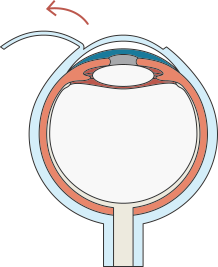
Step 2: Creating the Corneal Flap
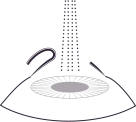
Your surgeon creates a thin flap in the upper layer of the cornea using a femtosecond laser. This all-laser approach is more precise and less invasive than traditional microkeratome blades. The flap is gently lifted to expose the underlying corneal tissue.
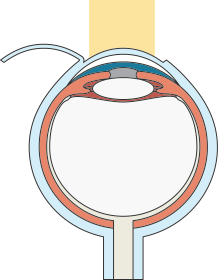
Step 3: Reshaping the Cornea
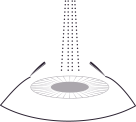
The excimer laser is used to precisely reshape the underlying corneal tissue according to your prescription and unique eye contours. You may see a red light during this step, which is normal. The entire laser treatment typically takes 20-40 seconds per eye.
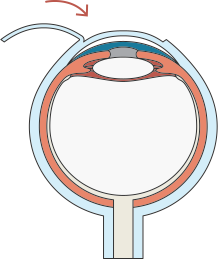
Step 4: Repositioning the Flap
The corneal flap is gently repositioned over the treated area. No sutures are required, as the flap adheres naturally. The surface is kept dry for several minutes and then flushed with antibiotic eye drops.
Step 5: Protection and Recovery
A temporary eye shield or patch is applied to protect your eye while it heals. You’ll receive detailed post-operative instructions and medications to support healing.

LASIK Recovery: What to Expect
Most patients experience improved vision immediately, though those with severe astigmatism may see more gradual improvement. You should expect to rest for the remainder of the day and follow your surgeon’s specific instructions carefully.
Immediate Recovery (First 24 Hours):
- You may experience mild burning or itching, but this typically resolves within 24 hours
- Vision may be slightly blurry or hazy initially
- Avoid rubbing your eyes
- Use prescribed eye drops as directed
- Wear the protective eye shield while sleeping
Short-Term Recovery (1-2 Weeks):
- Most patients resume regular routines the next day
- Vision continues to improve daily
- Avoid swimming, hot tubs, and water sports
- Avoid strenuous exercise and contact sports
- Avoid eye makeup for at least one week
- Possible side effects such as puffiness, sensitivity, and dry eyes generally resolve within the first several weeks
Long-Term Recovery (1-3 Months):
- Vision stabilizes and continues to improve
- Most side effects resolve completely
- You can resume all normal activities
- Dry eye symptoms typically improve with continued use of lubricating drops
LASIK Results and Benefits
LASIK offers significant benefits for qualified candidates:
- Significant reduction or elimination of dependence on corrective eyewear.
Trusted Source
Is LASIK Safe? What You Need to Know.
American Refractive Surgery Council
Go to Source
Over 90% of LASIK patients
achieve 20/20 vision or better, allowing you to enjoy activities without glasses or contacts.
- Quick and comfortable procedure with results that are often immediate. Most patients notice improved vision within hours of surgery.
- Most potential side effects are temporary and diminish upon healing.Dry eyes and glare typically resolve within
Trusted Source
Facts About LASIK Complications
American Academy of Ophthalmology
Go to Source
weeks to months.
-
Trusted Source
Is LASIK Safe? What You Need to Know.
American Refractive Surgery Council
Go to Source
Patient satisfaction rating of 96%
, among the highest of any elective procedure. This reflects the life-changing impact LASIK has on patients’ daily lives.
- Freedom to enjoy activities like swimming, sports, and outdoor adventures without worrying about glasses or contacts. Surfers, athletes, and outdoor enthusiasts particularly appreciate this benefit.
- Long-term cost savings. When compared to a lifetime of contact lens purchases and eye exams, LASIK often pays for itself within 10-15 years.
- Improved quality of life and confidence. Patients consistently report greater confidence and satisfaction with their appearance and vision.

LASIK Technology: Advanced Systems for Superior Results
We exclusively offer all-laser LASIK using the most advanced technology available. Traditional LASIK uses a microkeratome blade, but we only offer all-laser LASIK with femtosecond laser technology because it is less invasive and more precise.
Our WaveLight Refractive Suite is the gold standard for laser vision correction. We optimize vision for patients with nearsightedness and astigmatism using Contoura Vision Topography-Guided Laser Vision Correction, which corrects the unique imperfections in your cornea’s shape and optics.
Contoura Vision: Topography-Guided Laser Vision Correction
Contoura Vision represents a revolutionary advancement in LASIK technology. Rather than simply treating your eyeglass prescription, this technology uses advanced diagnostic capabilities to identify and record imperfections in the cornea’s curvature and optics. These measurements are combined with your eyeglass prescription to create a truly customized LASIK procedure that can enhance your eyesight.
In clinical studies, Contoura Vision helped 90% of patients see as well or better without glasses than they did with glasses. This technology may also reduce the potential for night glare, a common concern with traditional LASIK.
Contoura Vision works hand-in-hand with our state-of-the-art WaveLight EX500 laser and Topography-Guided Planning Software, allowing our experienced surgeons to create a personalized treatment plan that delivers stunning results.
Alcon Sightmap: Advanced 3D Eye Mapping for Personalized LASIK
At Gordon Schanzlin New Vision Institute, we are committed to utilizing the latest advancements in vision correction technology. Alcon Sightmap is a cutting-edge diagnostic platform designed to enhance the precision and personalization of LASIK procedures.
Sightmap creates a detailed 3D model of your eye, allowing our surgeons to develop a customized laser treatment plan tailored to your individual ocular anatomy. This comprehensive mapping ensures that the laser correction addresses the specific nuances of each eye, leading to improved visual outcomes.
By integrating Sightmap into our LASIK process, we provide our patients with a safer, more accurate, and highly personalized vision correction experience. This advanced 3D mapping technology represents a significant advancement over standard topography systems, allowing for even greater precision in treatment planning.
WaveLight Plus Ray-Tracing LASIK
WaveLight Plus represents the pinnacle of LASIK technology, utilizing advanced ray-tracing algorithms to optimize visual outcomes. This technology analyzes how light travels through your eye and creates a treatment plan that accounts for your unique optical characteristics, resulting in superior visual quality and reduced side effects.
Blended Vision – Monovision LASIK or PRK
As we age, our eyes naturally lose the ability to focus on near objects, a condition called presbyopia. This typically becomes noticeable in the 40s and 50s. Monovision LASIK is a specialized technique that can correct one eye for distance vision and the other eye for near vision. Your brain then blends these images together for the clearest results possible.
Monovision is typically used to treat age-related near vision loss in individuals who also have nearsightedness. Many patients find this approach provides excellent functional vision for both distance and near tasks without the need for reading glasses.

Are You a Candidate for LASIK?
Good candidates for LASIK generally meet these criteria:
- Are 18 years or older (preferably 21+, when vision has stabilized)
- Have suitable corneas (evaluated during your consultation)
- Have no history of eye disease such as glaucoma or keratoconus
- Have not had changes in vision or prescription in the past year
- Are in reasonably good overall health
- Are not pregnant or nursing
- Have realistic expectations about outcomes
- Are committed to post-operative care and
Trusted Source
Are you a LASIK Candidate? 5 guidelines you should know
Refractive Surgery Council
Go to Source
follow-up visits
During your initial consultation, one of our experienced eye surgeons will conduct a comprehensive vision evaluation to determine your candidacy. We’ve helped thousands of people who have struggled with poor vision improve their quality of life through LASIK.

LASIK Risks and Safety
LASIK is generally considered a safe and effective procedure when performed by an experienced refractive surgeon. According to research published by the American Refractive Surgery Council, LASIK has a complication rate estimated to be
Trusted Source
Is LASIK Safe? What You Need to Know
American Refractive Surgery Council
Go to Source
less than 1%
for major complications. Any surgical procedure carries some risk, however.
Many common LASIK side effects, such as dry eyes or hazy vision, are temporary and will diminish during healing. Potential complications of LASIK include:
- Dry eye syndrome (usually temporary): Most common side effect, typically resolves within 3-6 months with lubricating drops
- Unwanted changes in vision: Rare, but may include under-correction or over-correction
- Glare, halos, or double vision: Usually temporary and improve as the eye heals
- Corneal ectasia: Very rare
Trusted Source
Facts About LASIK Complications
American Academy of Ophthalmology
Go to Source
(less than 1 in 1,000 cases)
, a progressive weakening of the cornea
These complications are rare and most resolve with time or treatment. Our comprehensive pre-operative screening helps identify patients at higher risk and ensures appropriate treatment selection.
LASIK Alternatives: Other Vision Correction Options
If you are not a candidate for LASIK due to thin corneas or another reason, Gordon Schanzlin New Vision Institute offers other vision correction options:
PRK (Photorefractive Keratectomy): Similar to LASIK but without creating a corneal flap. The outer layer of the cornea is removed, and the laser reshapes the underlying tissue. PRK is suitable for patients with thin corneas and may have a slightly longer recovery period (1-2 weeks for functional vision, up to 3 months for complete healing).
EVO ICL™ (Implantable Collamer Lens): A removable lens implant that can correct higher prescriptions and is suitable for thin corneas. The ICL is placed inside the eye, in front of the natural lens. This procedure is reversible and does not permanently alter the cornea.
Refractive Lens Exchange (RLE): Replaces your natural lens with an intraocular lens to correct vision and address presbyopia. This procedure is particularly beneficial for patients over 50 who want to address both refractive error and presbyopia simultaneously.
Each procedure has distinct advantages. During your consultation, we’ll evaluate your needs and guide you to the best option for your vision and lifestyle.


LASIK Frequently Asked Questions
Does insurance cover LASIK?
Insurers consider LASIK an elective procedure and typically do not offer coverage. Some medical and vision insurance plans may qualify for discounts. Check with your plan to see what may be offered. We offer flexible financing options to make LASIK affordable for our patients.
How much does LASIK cost in San Diego?
The cost of LASIK varies depending on your unique vision needs, the technology used, and the experience of your surgeon. At Gordon Schanzlin New Vision Institute, we strive to make LASIK affordable and offer financing options to help you fit LASIK into your budget. During your consultation, we’ll provide a detailed cost estimate based on your specific needs.
Do I really have to stop wearing contacts before my LASIK surgery?
Yes. It is important that you discontinue wearing contact lenses for at least one week prior to your pre-surgery exam. Your surgeon may require a longer period depending on your prescription and treatment plan. Contact lenses can temporarily change the shape of your cornea, and your surgeon needs an accurate view of your cornea shape to optimize your results.
How soon after LASIK can I wear eye makeup?
We generally recommend waiting at least one week after surgery to wear eye makeup. Consider purchasing new products to reduce the risk of infection. Avoid getting makeup in your eyes during the healing period.
How Long Does LASIK Last?
LASIK is a permanent procedure in which your cornea is surgically reshaped to improve vision. There is a myth that LASIK “wears off,” but what actually happens is that your eyes change as you age. LASIK lasts forever, but will not prevent future changes in your eye health. You may still need reading glasses or other corrective lenses as you age due to presbyopia, a natural part of the aging process that occurs because of changes in the lens of the eye. Most people begin to notice presbyopia symptoms in their 40s.
Where can I find the best LASIK near me in San Diego?
Gordon Schanzlin New Vision Institute is conveniently located in La Jolla, serving patients throughout San Diego County. Our practice offers the most advanced LASIK technology available, combined with the expertise of pioneering surgeons who have literally shaped the field of vision correction. We provide personalized consultations to help you determine if LASIK is right for you, and we offer flexible financing options to make vision correction affordable. Schedule your free consultation today to take the first step toward clear vision.
Contact Gordon Schanzlin New Vision Institute
Ready to experience the freedom of clear vision? Schedule your custom LASIK consultation with Gordon Schanzlin New Vision Institute today. Our experienced team will evaluate your vision, answer your questions, and help you determine if LASIK is right for you.
The Patient Experience
From the staff to the LASIK procedure, the entire experience was amazing and one of the best decisions I have made. The team of staff and doctors went above and beyond to make you feel comfortable and they truly care.
Sources1 American Refractive Surgery Council. Is LASIK Safe? What You Need to Know. Available: https://americanrefractivesurgerycouncil.org/is-lasik-safe/. Accessed January 20, 2026.
2 American Refractive Surgery Council. Is LASIK Safe? What You Need to Know. Available: https://americanrefractivesurgerycouncil.org/is-lasik-safe/. Accessed January 20, 2026.
3 American Academy of Ophthalmology. Facts About LASIK Complications. Available: https://www.aao.org/eye-health/treatments/facts-about-lasik-complications. Accessed January 20, 2026.
4 American Refractive Surgery Council. Is LASIK Safe? What You Need to Know. Available: https://americanrefractivesurgerycouncil.org/is-lasik-safe/. Accessed January 20, 2026.
5 Refractive Surgery Council. Are you a LASIK Candidate? 5 guidelines you should know. Available: https://americanrefractivesurgerycouncil.org/general-lasik-candidate-guidelines/. Accessed January 20, 2026.
6 American Refractive Surgery Council. Is LASIK Safe? What You Need to Know. Available: https://americanrefractivesurgerycouncil.org/is-lasik-safe/. Accessed January 20, 2026.
7 American Academy of Ophthalmology. Facts About LASIK Complications. Available: https://www.aao.org/eye-health/treatments/facts-about-lasik-complications. Accessed January 20, 2026.
The doctors at Gordon Schanzlin New Vision Institute have either authored or reviewed and approved this content.
Page Updated:
 Call
Call  Book
Book  Location
  Specials